10 Oct,2026 UTC+8 Views:
In modern industrial production, the ball mill is a large grinding machine widely used in mining, building materials, metallurgy and the chemical industry. However, the high-intensity noise generated during operation is a headache for many grinding plants: ball mill noise not only affects the health and working efficiency of frontline operators, but also disturbs the surrounding environment and may even violate environmental regulations. Drawing on real project cases, CHAENG (Xinxiang Great Wall Machinery Co., Ltd.) analyzes the five core causes of ball mill noise and provides professional, practical noise reduction solutions to help enterprises achieve green and safe production.
At a glance - the five main causes of excessive ball mill noise: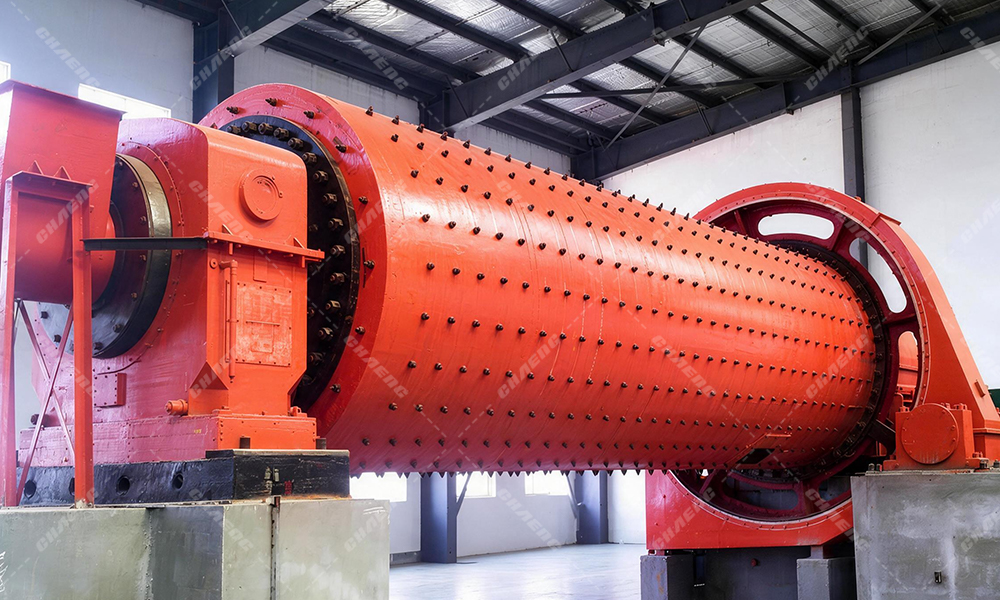
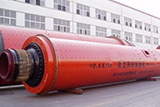
A CHAENG ball mill in operation: correct liner installation, ball gradation and foundation design are the basis of low-noise grinding.
The main sources of ball mill noise can be summarized as mechanical vibration and the knocking sound of grinding media. During high-speed operation, the shell, liners, steel balls and ground material all generate intense noise, and as the equipment ages and parts become damaged, the noise problem usually grows worse. Scientifically classifying the noise sources is the first step, and they generally include:
The inner wall of the ball mill shell is normally fitted with manganese steel or abrasion-resistant rubber liners. Once the liners are damaged or become loose, the noise produced when steel balls strike them rises sharply. Uneven installation or insufficient bolt tightening also intensifies vibration and noise during operation.
Steel balls act as the grinding medium together with the material. After long-term operation, ball surfaces deform, wear down and even break, making impact noise irregular and increasingly severe. In addition, an unreasonable ball gradation - an unbalanced ratio of large balls to small balls - also causes abnormal impact and vibration noise.
The key components of the ball mill drive system are the reducer gear set and the bearings. When gear tooth surfaces wear, meshing becomes poor, clearance grows too large, or bearings run dry of oil or fail, obvious howling and structural vibration noise occur. This kind of noise is usually accompanied by major mechanical risk and should be treated as a warning signal.
The motor is another major noise source in the ball mill system. Uneven feet or loose foundation bolts, a drive belt that is too tight or too loose, misaligned couplings and motor rotor faults can all cause unstable motor operation and abnormal noise.
A ball mill is large and runs at high speed. If the foundation lacks stiffness or damping measures are insufficient, the whole machine is prone to resonance - in severe cases the entire plant building trembles and the noise problem is amplified.
Check liner wear regularly and repair or replace detached or damaged sections promptly. When fitting new liners, follow the specifications, tighten the bolts correctly, and give priority to abrasion-resistant liners with good sound absorption properties - such as composite liners and polyurethane liners - which can greatly reduce impact noise.
Configure the ratio of large, medium and small steel balls according to the process standard of the material being ground. Pay attention to ball density and volume during the initial ball charge, and replenish new balls regularly according to their wear. Preventing excessive ball wear eliminates abnormal noise while improving grinding efficiency and reducing vibration.
Establish a complete inspection regime: regularly check gear meshing condition and lubrication, and repair or replace parts in time at the first signs of tooth surface wear, abnormal noise or overheating bearings. Choosing high-quality lubricating oil and grease improves lubrication and effectively reduces the operating noise of these components.
When installing the motor, calibrate the foot level strictly, tighten the bolts, and check coupling alignment regularly. Adjust belt tension properly to keep the motor running stably. For old motors, installing a vibration-damping base or replacing them with quiet, high-efficiency motors reduces electromagnetic noise at its root.
In the early construction stage, build the equipment foundation with sufficiently thick concrete and add damping pads to raise base stiffness. For mills already in service, add vibration-damping supports and damping pads, and where necessary adopt shell reinforcement and acoustic enclosures to effectively suppress structural resonance and noise leakage.
According to the actual site conditions, a sound insulation room or acoustic hood made of a steel structure filled with glass wool or rock wool can be built around the ball mill, blocking high-frequency noise and preventing its spread as far as possible - easy to maintain and highly cost-effective.
Plan the ball mill layout sensibly and keep it away from office and living areas; use multi-layer sound insulation structures for walls, doors and windows to stop noise transmission. Where several ball mills work side by side, process space should be arranged scientifically for isolation.
Provide operators with professional earmuffs, earplugs and other protective equipment, and arrange regular health checks in strict accordance with national occupational health requirements to create a green working environment.
To solve excessive ball mill noise effectively, temporary treatment alone is not enough. Companies should establish an acoustic environment monitoring mechanism during equipment operation, measuring noise levels at key points around the ball mill at regular intervals to detect and prevent exceedances early. For new equipment, special attention should be paid to strict control of design, selection and installation to avoid noise pollution risks from the start.
More and more enterprises are attaching importance to green production. Adopting new noise control technology not only improves the working environment and reduces employee illness rates, but also earns greater social credibility. Some provinces and cities have issued noise emission standards, and environmentally friendly operation of ball mills is the general trend. Investment in noise reduction also plays a direct role in enhancing brand image and core market competitiveness. Standardized management and scientific control of ball mill noise are an important part of sustainable enterprise development.
Pre: Vertical Roller Mill for Talc – 3-Month Case Results from a 300,000 tpy Plant
Next: Back to list