Why Is Ball Mill Output Low? 5 Main Causes and How to Improve Ball Mill Production Capacity
22 Oct,2026 UTC+8Views:
Share to:
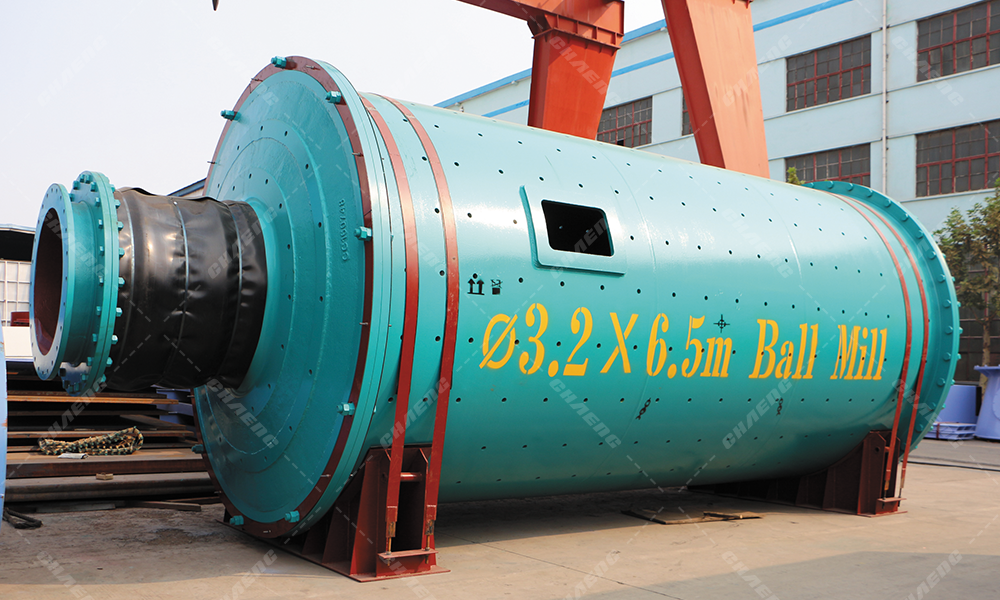
In non-metallic mineral powder processing and ore beneficiation production lines, the ball mill is the core grinding equipment. Many users find that after a period of operation, the ball mill fails to reach its designed capacity and the output keeps declining. Insufficient ball mill capacity directly reduces the efficiency of the entire production line, increases the power consumption per ton of powder product, accelerates the wear of steel balls and liners, and significantly raises operating costs. Based on years of experience in ball mill R&D, manufacturing and on-site commissioning, Xinxiang Great Wall Machinery (CHAENG) summarizes the main causes of low ball mill output and provides practical optimization solutions to help customers stabilize capacity and achieve efficient, low-consumption production.
Part 1: Main Causes of Low Ball Mill Output
1. Feed Material Conditions Do Not Match the Ball Mill Design Parameters
Feed material characteristics are the most fundamental factor affecting ball mill output. When the feed particle size is too large, the ball mill consumes a large amount of energy on crushing, which occupies the grinding capacity and directly reduces the mill throughput. Materials with high hardness and poor grindability are more difficult to grind under the same operating conditions, so the output decreasesaccordingly.
In dry ball mill operation, excessive feed moisture causes ball and liner coating: fine powder adheres to the surfaces of steel balls and liners, weakening the impact and grinding effect, clogging the grate openings and resulting in “over-full grinding”. In wet ball mill operation, the slurry concentration must be stably controlled — slurry that is too thick forms a cushioning layer that absorbs the impact energy of the steel balls and lowers mill capacity. Too many impurities or fluctuating feed rates also make operating conditions unstable, causing output to fluctuate.
2. Unreasonable Steel Ball Charging Volume and Ball Grading
Steel balls are the grinding media of the ball mill; the ball filling rate and ball grading directly determine the grinding efficiency. When the filling rate is too low, the total grinding media is insufficient and the impact energy is not enough, making it hard to increase output. When the filling rate is too high, the effective grinding space inside the cylinder shrinks, the ball falling trajectory is shortened, impact work is weakened, and the motor load rises — which also reduces capacity. Steel balls wear continuously during production and large balls gradually become smaller. Without a regular ball replenishment system, the original ball grading becomes unbalanced. Lacking large balls to crush coarse particles and relying only on small balls for grinding, coarse material accumulates inside the mill, discharge becomes coarser and output drops. Some projects use only a single ball size, which cannot cover both coarse crushing and fine grinding — a common reason why the mill fails to reach its designed output.
3. Wear and Blockage of Internal Components Such as Liners and Partition Plates
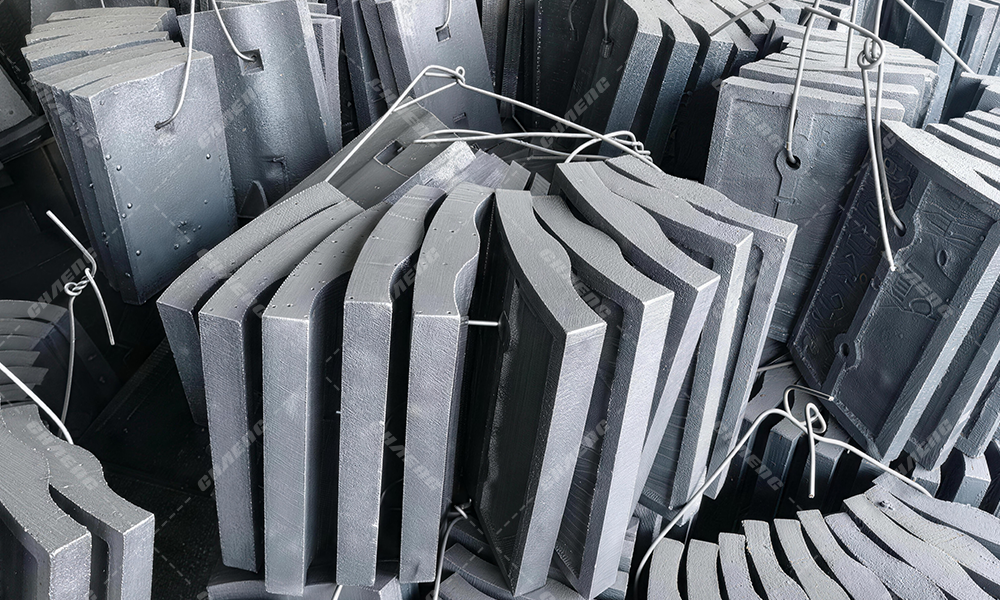
The main function of the liner is to lift the steel balls and control their falling trajectory. When liners are worn over a long period and the lifting bars are flattened, the lifting capacity declines, the balls cannot reach the ideal dropping height, impact work is insufficient, and grinding efficiency keeps decreasing. When the grate openings of the partition plates and discharge grate are blocked by fine powder and debris, qualified material is retained inside the mill and over-grinding occurs: finished fine powder cannot be discharged in time and new material cannot continuously enter the mill, forming an over-full grinding state. The intuitive signs are reduced output and abnormal fluctuation of the main motor current.
4. Poor Match Between Mill Ventilation and the Classification System
In a dry ball mill system, internal ventilation carries qualified fine powder out and removes moisture and heat. Insufficient air volume means fine powder cannot leave the mill chamber in time, leading to continuous over-grinding; fine powder coats the steel balls and reduces grinding efficiency. Excessive air volume carries coarse particles into the classification equipment, increasing its load, raising the return rate and burdening the mill. If the matching classifier or cyclone has poor classification efficiency, a large amount of coarse powder circulates back to the ball mill. The load inside the mill keeps increasing, squeezing the effective grinding volume, and the mill runs overloaded for a long time, making output hard to improve. In closed-circuit grinding systems, mismatched parameters between the classifier and the ball mill are an important cause of production lines failing to reach capacity.
5. Equipment Selection, Transmission System and Site Operation Problems
At the project selection stage, if the ball mill specification is too small for the designed capacity of the production line, or the material characteristics do not match the mill model, the mill fundamentally cannot reach the expected output. Transmission and main bearing failures also restrict capacity: poor main bearing lubrication, high bearing bush temperature, and wear of the reducer and girth gear prevent the mill from reaching rated speed, causing abnormal cylinder rotation and insufficient grinding work. Meanwhile, improper feed control and inadequate inspection by operators mean hidden problems such as ball wear and grate blockage are not found in time, affecting stable output in the long run.
Part 2: How to Improve Ball Mill Output and Stabilize the Production Line
1. Optimize Feed Pretreatment and Stabilize Feeding Conditions
Following the industry principle of “more crushing, less grinding”, equipping crushing and pre-grinding equipment before the ball mill to reduce feed particle size is the most cost-effective way to increase output. Strictly control feed moisture — for dry grinding, control moisture indicators to prevent ball coating; for wet grinding, keep the slurry concentration stable. Keep feeding continuous and uniform, install feeding-stabilizing and impurity-removing devices, and prevent large blocks and impurities from entering the mill.
2. Set the Steel Ball Filling Rate Scientifically and Improve Ball Grading and Replenishment
Based on material characteristics, cylinder specification and finished product fineness requirements, calculate a reasonable ball filling rate and match large, medium and small balls: large balls crush coarse particles while small balls handle fine grinding, covering both impact crushing and powder grinding. Establish a routine ball replenishment system: regularly stop the mill for sampling to check ball wear and add large balls in a quantitative manner according to wear patterns, keeping the ball grading stable. Xinxiang Great Wall Machinery (CHAENG) can customize steel ball grading solutions for customers, suitable for grinding projects of barite, limestone, iron ore and other non-metallic and metallic minerals.
3. Regularly Maintain Liners and Partition Plates to Keep Internal Components in Good Condition
Establish a regular inspection and maintenance plan: check liner wear on schedule and replace liners whose lifting bars are seriously worn, ensuring a normal ball lifting and falling trajectory. Regularly clean the partition plates and grate openings, remove blocked powder and keep material passages clear to avoid over-full grinding and over-grinding. During maintenance, also check the cylinder and bolt tightness to eliminate hidden dangers and ensure long-term stable operation.
4. Optimize Mill Ventilation and Jointly Debug the Classification System
For dry ball mills, adjust the fan air volume and negative pressure to control a reasonable air speed inside the mill, discharge qualified fine powder in time, remove moisture and reduce ball coating. Optimize the operating parameters of the classifier to improve classification efficiency, reduce the return rate and the circulating load of coarse powder, and relieve grinding pressure. Closed-circuit grinding systems should be jointly debugged with the classification equipment so the whole system is optimized to maximize mill capacity.
5. Standardize Operation and Maintenance, and Upgrade When Necessary
Standardize the operation procedures: monitor key parameters in real time — mill current, main bearing temperature and discharge fineness — and adjust the feed rate immediately when over-full grinding or abnormal discharge occurs. Keep the main bearings and transmission gears well lubricated to ensure operation at rated speed. If the existing ball mill is outdated in selection and structural design, contact Xinxiang Great Wall Machinery (CHAENG) for technical upgrades of the liner structure, chamber layout and transmission system, improving the processing capacity on the original equipment basis and reducing energy consumption per ton.
Part 3: Conclusion
Low ball mill output results from multiple factors: material conditions, grinding media, internal components, ventilation and classification, and operation & maintenance. When troubleshooting, we suggest an outside-in sequence: first check the feed conditions and supporting systems, then the ball grading and liner wear, and finally the transmission and operating parameters to locate the fault point step by step. Xinxiang Great Wall Machinery (CHAENG) has been deeply engaged in ball mill manufacturing for decades, providing various ball mill equipment for beneficiation and non-metallic mineral powder projects, together with integrated technical services covering site survey, selection design, commissioning and maintenance. We customize ball mill capacity improvement plans according to site conditions, solving the problems of insufficient output and high energy consumption, and helping powder and beneficiation production lines reach capacity stably.