28 Oct,2026 UTC+8 Views:
| Item | Detail |
|---|---|
| Product | GGBS powder, grades S95 and S105 |
| Main raw material | Water-quenched blast-furnace slag from iron and steel plants |
| Core equipment | Slag vertical roller mill (drying + grinding in one machine), feeding, conveying, dust collection, packaging, intelligent control |
| Product fineness | Specific surface area 420–500 m²/kg |
| Reference standard | GB/T 18046 (China); verify export grades against EN 15167 or ASTM C989 in the destination market |
| Energy position | VRM line saves 25–40% grinding electricity vs ball-mill system (CHAENG engineering estimates) |
| Typical payback | 2–3 years with stable slag supply and secured sales channels |
| Logistics share of total cost | ~7–12% |
| Labor share of total cost | ~10–15% (modern automated lines sit at the low end) |
GGBS is a high-performance mineral admixture made by drying and fine-grinding granulated blast-furnace slag. Blended into concrete or cement, it raises late-age strength and durability — chloride and sulfate resistance in particular — while cutting clinker content, cost and embodied CO₂. The main buyers are ready-mix concrete plants, cement producers, precast factories and construction-material distributors.
Grade S95 means a 28-day activity index of at least 95%: the slag-cement mortar reaches 95% of the strength of a pure-cement reference at 28 days. S105 exceeds 105%. For international projects, check the destination market's equivalent — S95 broadly corresponds to Grade 100 territory under ASTM C989 and to mid/high classes under EN 15167, but the mapping must be verified against the local standard, not assumed.
Three structural trends support new slag-grinding capacity. First, policy: governments treat slag valorization as industrial waste recycling, which simplifies approvals and, in many regions, brings tax or green-finance benefits. Second, demand: the number of producers running lines above one million tonnes per year keeps growing, and demand concentrates wherever steelmaking and construction overlap. Third, geography: in slag-rich industrial regions, raw material is cheap and close, which is exactly where the economics work best.
| Item | What it includes | Notes |
|---|---|---|
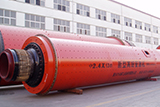
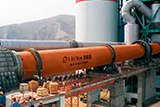
| Grinding equipment | Slag VRM or ball mill, feeding and conveying, dust collection, packaging, intelligent electronic control system | The largest single item; price varies with capacity, automation level and mill type |
| Civil works | Plant buildings, foundations, warehouse, offices, transport roads, water and power infrastructure | Driven by project scale and local construction prices |
| Environmental and safety systems | Dedusting, waste-gas and noise treatment; fire protection | Required for approval; budget from day one |
| Approvals and taxes | Construction, environmental and safety audits; VAT and corporate income tax in operation | Third-party consultants can shorten the process |
| Item | Share / driver | Practical note |
|---|---|---|
| Raw slag | Low unit cost, bought by the tonne from steel plants | Impurities, moisture content and transport distance move the price; regional supply quality varies |
| Logistics | ~7–12% of total cost | Own fleet vs third-party logistics, loading/unloading fees; distance from slag source is the dominant variable |
| Labor | ~10–15% of total cost | Modern VRM lines are highly automated and sit at the low end; add maintenance staff and spare-parts stock |
| Energy | Mill power is the single largest controllable operating cost | This is where VRM vs ball mill decides the margin |
| Taxes and compliance | VAT, corporate income tax, periodic environmental compliance | Track policy changes |
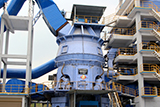
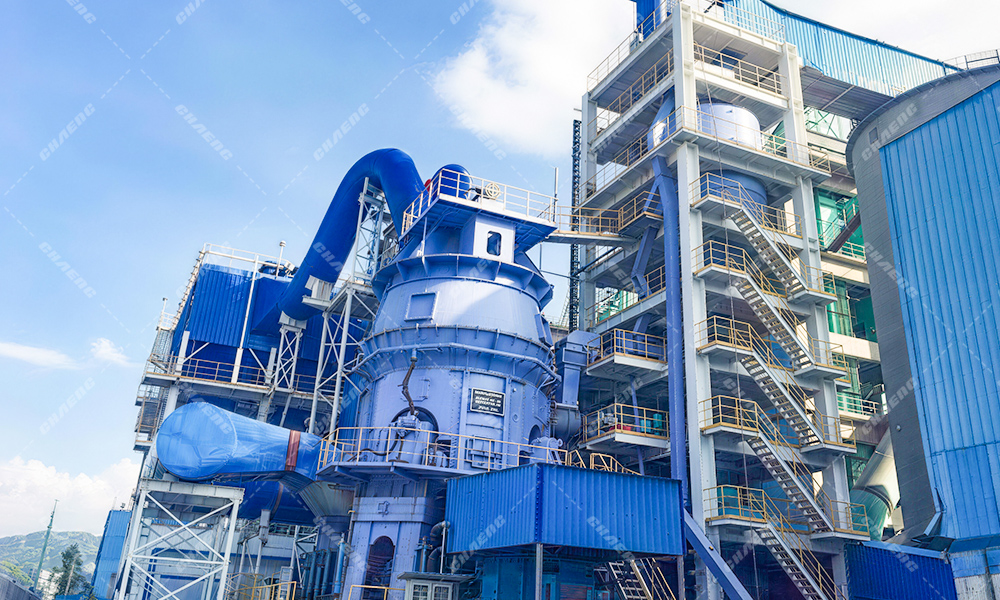
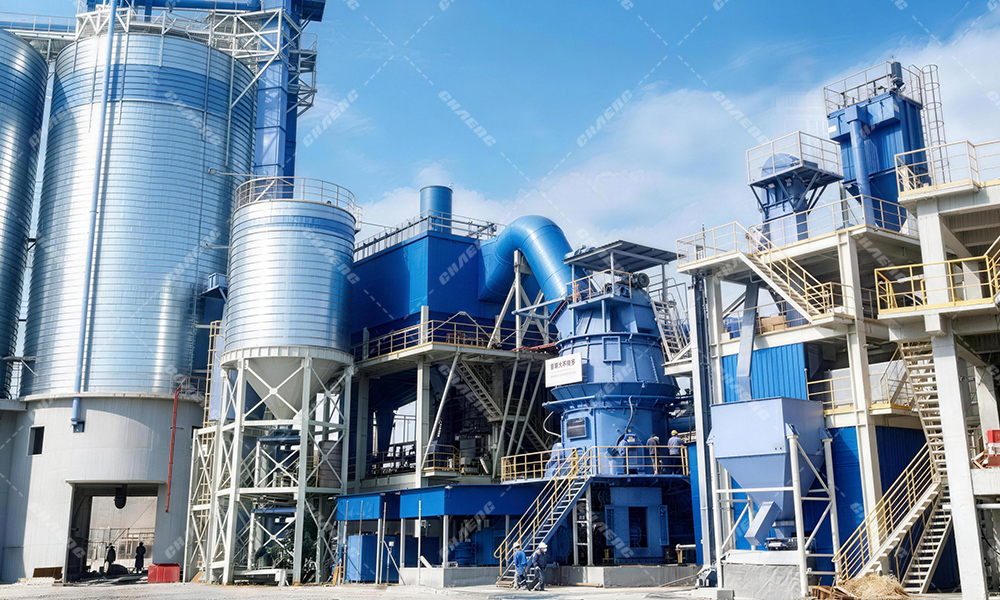
New-built lines have converged on the slag VRM as the mainstream route, replacing traditional ball-mill systems. A complete line integrates raw-material storage, conveying, drying, grinding, classifying, dust collection, finished-product storage and bulk dispatch — with one machine, the vertical roller mill, performing drying and grinding simultaneously.
| Factor | Vertical roller mill (e.g. CHAENG GRMS series) | Ball-mill system |
|---|---|---|
| Energy consumption | 25–40% lower grinding electricity | Baseline |
| Footprint | Smaller — drying and grinding in one machine | Larger, plus separate dryer typically |
| Process stability | Specific surface area controlled at 420–500 m²/kg; stable S95/S105 output | Fineness drifts more, more rework risk |
| Maintenance | Simpler, fewer wear parts per tonne | More frequent liner and media replacement |
| Dust emission and environmental acceptance | Lower emission, easier approval | Higher dust load |
| Installation and commissioning | Shorter | Longer |
For CHAENG's GRMS series slag vertical roller mill, this combination — low power draw, stable fineness, easy environmental acceptance — is the core selling point of the integrated slag powder production line.
Revenue depends on regional price levels. GGBS prices are highest in developed, construction-active regions with tight supply; inland and traditional industrial zones price lower. Sales channels are ready-mix concrete, cement plants, the steel industry's own admixture needs and precast factories.
On the cost side, profitability comes from the gap between selling price and the sum of equipment depreciation, raw slag, labor, energy and taxes. Supply-demand balance, investment level, technology and management efficiency all move that gap.
On cash flow: with stable slag supply and secured downstream channels, projects typically recover capital in 2–3 years, then run on stable positive cash flow. Product upgrades, dual-grade output and brand building widen the margin further.
A slag powder whose 28-day activity index is at least 95% of the reference cement mortar's strength. It is the workhorse grade for concrete admixture; S105 exceeds 105% and carries a price premium.
It depends on capacity, mill type and local civil costs. The grinding equipment is the largest fixed item; logistics runs at roughly 7–12% and labor at 10–15% of total cost. Request a quotation against your capacity target and site conditions — CHAENG sizes the mill and the full line from your slag supply and market data.
Typically 2–3 years where slag supply is stable and sales channels are secured, after which the line runs on stable cash flow.
Lower power draw (25–40% less grinding electricity), smaller footprint, integrated drying and grinding, more stable fineness, easier environmental acceptance and simpler maintenance. That is why new lines have converged on VRM as the mainstream route.
Three things determine the outcome: a long-term water-quenched slag supply agreement, local GGBS selling prices, and the transport radius to your customers. Fix these first, then size the plant and choose the process.
Yes. With stable specific-surface-area control, the same line shifts between grades; running dual grades captures the premium on the higher grade without a second line.
A GGBS production line is a solid waste-recycling project with policy support and stable demand — but its returns are tightly coupled to steel-mill slag supply, energy cost and the regional construction-materials market. At equal capacity, a vertical-roller-mill line outperforms a ball-mill scheme on ROI: lower operating cost, more stable product quality, faster environmental acceptance. And the investment decision should never rest on theoretical payback alone: lock the slag supply agreement, survey local powder prices and calculate the transport radius before fixing the scale and process.
CHAENG (Xinxiang Great Wall Machinery) provides one-stop service for GGBS production lines — from process design and complete GRMS slag vertical roller mill equipment to installation, commissioning and O&M — with investment calculations customized to your site conditions. Contact us for a project-specific feasibility assessment.
Sources: company engineering and project data from CHAENG (Xinxiang Great Wall Machinery), October 2026. Cost shares and payback ranges are engineering estimates based on completed projects, not guarantees; verify against local conditions.
Pre: Why Is Ball Mill Output Low? 5 Main Causes and How to Improve Ball Mill Production Capacity
Next: Wet vs Dry Ball Mill: Differences and Selection Points