13 Nov,2026 UTC+8 Views:
1. Which Ball Mill Is Mainstream for Lithium Ore Beneficiation?
Lithium ores include pegmatite-type spodumene, lepidolite, petalite, etc. As different ores vary in hardness, mud content and subsequent separation processes, the suitable ball mill types differ significantly. Most lithium concentrators adopt wet closed-circuit grinding, and the ball mills used fall into two main categories: grate type and overflow type.
1) Grate-discharge ball mill (preferred for primary rough grinding)
Grate-discharge ball mills are fitted with discharge grate plates, featuring fast discharge, low slurry level and low risk of over-grinding. They are suitable for primary rough grinding, with feed size generally controlled at 6–12 mm, and are mostly used in the first stage of two-stage closed-circuit grinding. Spodumene is relatively hard; a grate-discharge mill can steadily increase throughput and, combined with hydrocyclone clusters, form a closed circuit in which coarse particles return to the mill for regrinding. It is ideal for large-scale lithium beneficiation projects with high single-unit capacity and stable operation.
2) Overflow ball mill (secondary fine grinding / single-stage fine grinding)
Overflow ball mills discharge by slurry level overflow, offering longer grinding time and finer product size, suitable for secondary fine grinding or single-stage grinding in small concentrators. When lithium ore needs to be ground to 70%–85% passing 200 mesh to provide qualified slurry for flotation, overflow mills are widely used. For easily sliming ores such as lepidolite, properly controlling slurry concentration with an overflow mill reduces excessive fines generation and lowers flotation reagent consumption.
3) Dry ball mill for special conditions
A few projects in water-scarce areas, with direct roasting for lithium extraction, or with strict slurry moisture limits choose dry ball mills equipped with air classifiers and pulse dust collectors. However, dry grinding produces heavy dust and higher energy consumption. Spodumene flotation processes generally do not recommend dry ball mills, as dry grinding can more easily alter the surface properties of lithium minerals and affect flotation performance.
4) Additional tip: controlling iron contamination
For projects requiring battery-grade lithium concentrate, rubber liners and ceramic grinding media can be selected inside the mill to reduce iron impurities from steel balls and steel liners, preventing iron from depressing lithium mineral flotation.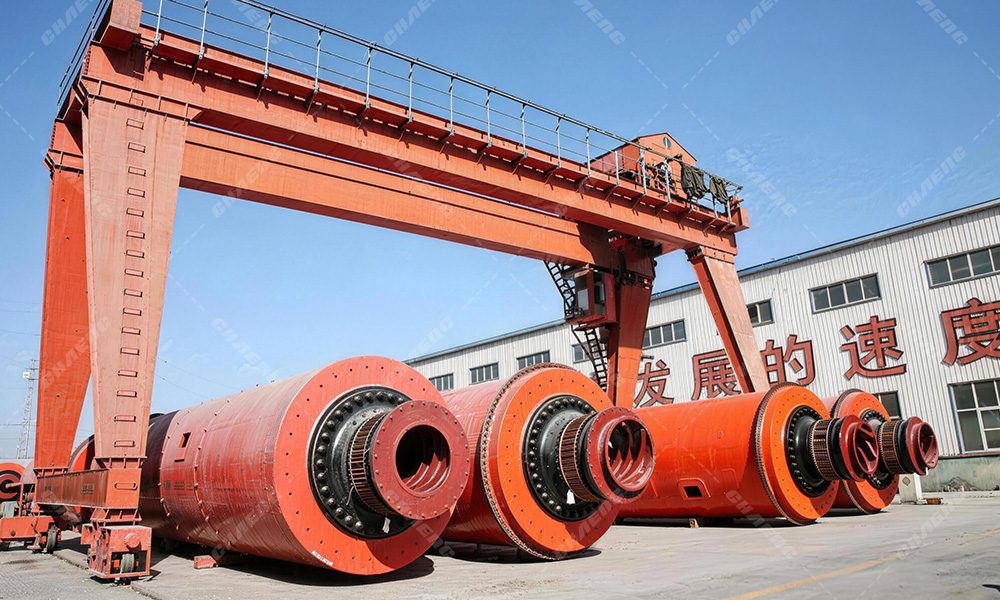
2. Core Grinding Process Solutions for Lithium Ore
Lithium ore grinding should prioritize closed-circuit grinding, as open-circuit grinding can hardly stabilize product fineness and tends to produce a bimodal size distribution. The mainstream solutions are single-stage and two-stage closed-circuit grinding, both centered on lithium ball mills.
1) Single-stage closed-circuit grinding
Suitable for small and medium lithium concentrators with easily grindable ore and stable feed grade. Process: crushed material is fed into the ball mill by a feeder → the slurry is classified by a hydrocyclone or spiral classifier → coarse particles return to the mill for regrinding, while qualified overflow slurry goes directly to flotation. Advantages: simple system, low investment and easy O&M; disadvantages: limited fineness adjustment range and indicators that drift easily with ore fluctuations.
2) Two-stage closed-circuit grinding (mainstream for large spodumene concentrators)
Stage 1: grate-discharge ball mill + cyclone rough classification for preliminary liberation. Stage 2: overflow ball mill + cyclone + high-frequency fine screen for precise classification; qualified fine overflow goes to flotation, while coarse particles return to the second-stage mill for regrinding. This solution precisely controls grinding fineness, reduces over-grinding and stabilizes spodumene flotation recovery. Most large lithium projects in China adopt two-stage closed-circuit grinding.
3. Key Process Control Points for Lithium Ore Grinding
Lithium ore grinding is not simply about grinding finer. The core goal is full liberation of lithium minerals while strictly controlling the slimes produced by over-grinding, since slimes adsorb flotation reagents and sharply reduce concentrate recovery — the biggest difference from ordinary metal ore grinding.
1) Grinding fineness control
Conventional fineness for spodumene flotation: 60%–80% passing 200 mesh; lepidolite is slightly finer, generally 75%–85% passing 200 mesh. Insufficient fineness leaves many locked particles and the concentrate grade cannot rise; excessive fineness produces large amounts of -325 mesh slimes, reagent consumption soars and recovery declines. Fineness must be determined by ore test data — do not blindly pursue finer grinding.
2) Slurry concentration control
For wet lithium ball mills, slurry concentration is recommended at 35%–45%. If too high, the slurry flows poorly, particles agglomerate inside the mill and grinding efficiency drops; if too low, ball impact and grinding effect weaken, classifier overflow becomes coarser, circulating load rises and energy consumption increases. In production, keep feed rate and water addition stable to avoid large concentration fluctuations.
3) Circulating load and classification equipment matching
The circulating load in closed-circuit grinding is recommended at 150%–250%, and cyclone pressure and apex size must match the ball mill capacity. For high-mud lithium ores, add a desliming stage ahead of classification to remove primary slimes early and prevent them from accumulating and being repeatedly ground in the circuit.
4) Grinding media optimization
Ball size ratio and filling rate directly affect grinding performance. Spodumene is hard and requires multi-size ball charging (large + small balls); lepidolite is softer, so the proportion of large balls should be reduced to lower impact over-grinding. Mill filling rate is generally 30%–40%; add and clean balls regularly to maintain a stable media gradation.
5) Liners and contamination control
Ordinary high-manganese steel liners gradually wear and introduce iron impurities, which is harmful for battery-grade lithium concentrate. High-end lithium projects can choose rubber or magnetic liners, which are wear-resistant and reduce iron contamination. Also maintain proper lubrication and sealing to prevent lubricating oil from entering the slurry and disturbing the flotation reagent system.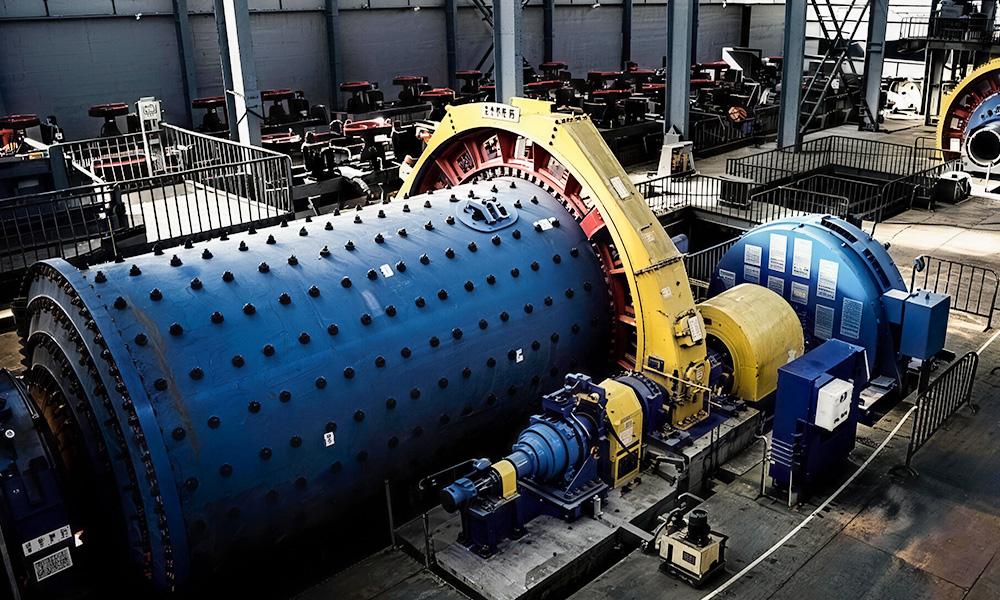
4. Pitfalls to Avoid When Selecting a Lithium Ball Mill
1. Do not compare price alone; prioritize ore grindability index, throughput and target fineness. Many projects with low-priced equipment end up with insufficient capacity and off-spec fineness, and retrofitting costs even more later.
2. Lepidolite and weathered lithium ores have high mud content — do not copy hard-rock spodumene mill schemes directly. Run grinding tests in advance to determine the flowsheet and classification configuration.
3. For water-scarce areas planning dry grinding, evaluate dust control, energy consumption and flotation compatibility in advance; dry ball mills are not suitable for flotation processes.
4. Automation: large lithium ball mills should be equipped with online concentration and particle size monitoring and a variable-frequency feeding system to adjust feed, water and ball addition in real time for stable grinding indicators.
5. CHAENG's Lithium Ball Mill Services
With over 60 years of mill R&D and manufacturing experience, Xinxiang Great Wall Machinery (CHAENG) can customize complete sets of grate-type and overflow lithium ball mills according to customers' ore test reports, site conditions and capacity targets. The company also provides integrated services including grinding process design, equipment installation and commissioning, O&M training and spare parts supply, suitable for spodumene, lepidolite and other lithium beneficiation production lines, helping upstream new-energy lithium concentrators achieve energy-saving, stable and efficient production.
For a grinding process solution and ball mill parameter calculation for your lithium ore samples, feel free to contact the CHAENG technical team.